

-
Contact number:
+86 752 3339581 / 3339952 +86 755 84660522 / 84682177


Time:2026-11-19 Editor:Mike Views:0
INDUSTRY INSIGHTS & INFRASTRUCTURE ANALYSIS | LEAD OPTO
Long Term Opportunities in Asia Pacific Low Carbon Infrastructure and LEAD OPTO's Product Deployment Pathway
Short Answer The 2026 APEC Shenzhen Summit demonstrates that clean public transit and independent road lighting must advance together across the Asia Pacific. While Shenzhen's electric bus fleet cuts vehicle emissions on urban roads, solar streetlights provide essential roadside illumination for weak grid highways, rural roads, industrial parks, and port corridors without trenching or grid extension costs. Meanwhile, U.S. Section 232 polysilicon tariffs, mandatory TISI certification in Thailand, compulsory solar regulations in the Philippines, and China's April 2026 export tax rebate cancellation are raising compliance thresholds. Long term competitiveness in Asia Pacific outdoor lighting now depends on complete product certifications, consistent reliability, and turnkey engineering solutions. |
The Shenzhen Benchmark: A City Built on a Green Foundation
From November 18 to 19, 2026, the 33rd APEC Economic Leaders' Meeting took place in Shenzhen. Throughout the summit, one detail repeatedly drew the attention of visiting delegates: Shenzhen has virtually completed the transition of its entire public bus fleet to new energy vehicles, leaving almost no conventional fuel buses on the streets. Several guests described this citywide transformation as "remarkable." Shenzhen is not merely a hub of technological innovation, as it is also a model of green urban development. Participants noted that this achievement reflects far more than a single municipality's technical upgrade; it demonstrates the synchronized pace at which the Guangdong, Hong Kong, and Macao Greater Bay Area, and China as a whole, are advancing the electrification of public transportation.
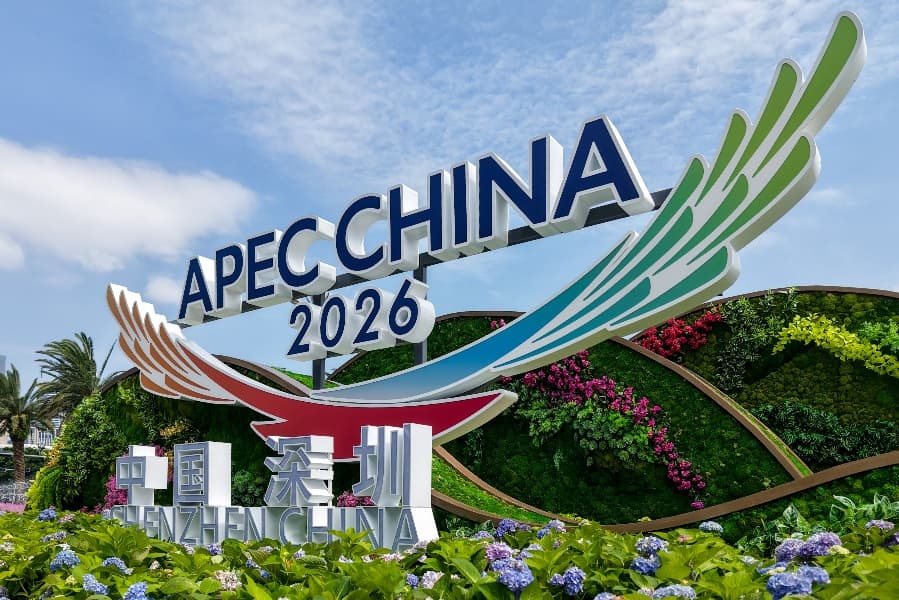
Figure 1: APEC 2026 SHENZHEN CHINA (Source: Public Media Reports)
Electrifying public transit addresses "roadway emissions," yet a city's green foundation equally encompasses its supporting road infrastructure. Once a highway is paved with asphalt and served by electric buses, nighttime traffic efficiency and road safety remain constrained without adequate roadside illumination. On rural roads and in remote areas where grid coverage is weak and cabling costs are prohibitively high, connecting conventional streetlights represents an unaffordable capital burden. Solar streetlights bridge this exact gap: operating independently from the grid with zero trenching or wiring and functioning autonomously unit by unit, they extend reliable lighting at low cost along bus corridors, industrial parks, rural highways, and port logistics routes. The takeaway from Shenzhen's electric bus fleet is clear: green infrastructure must be developed systematically, bringing transportation, energy, and road facilities together on a single unified blueprint.
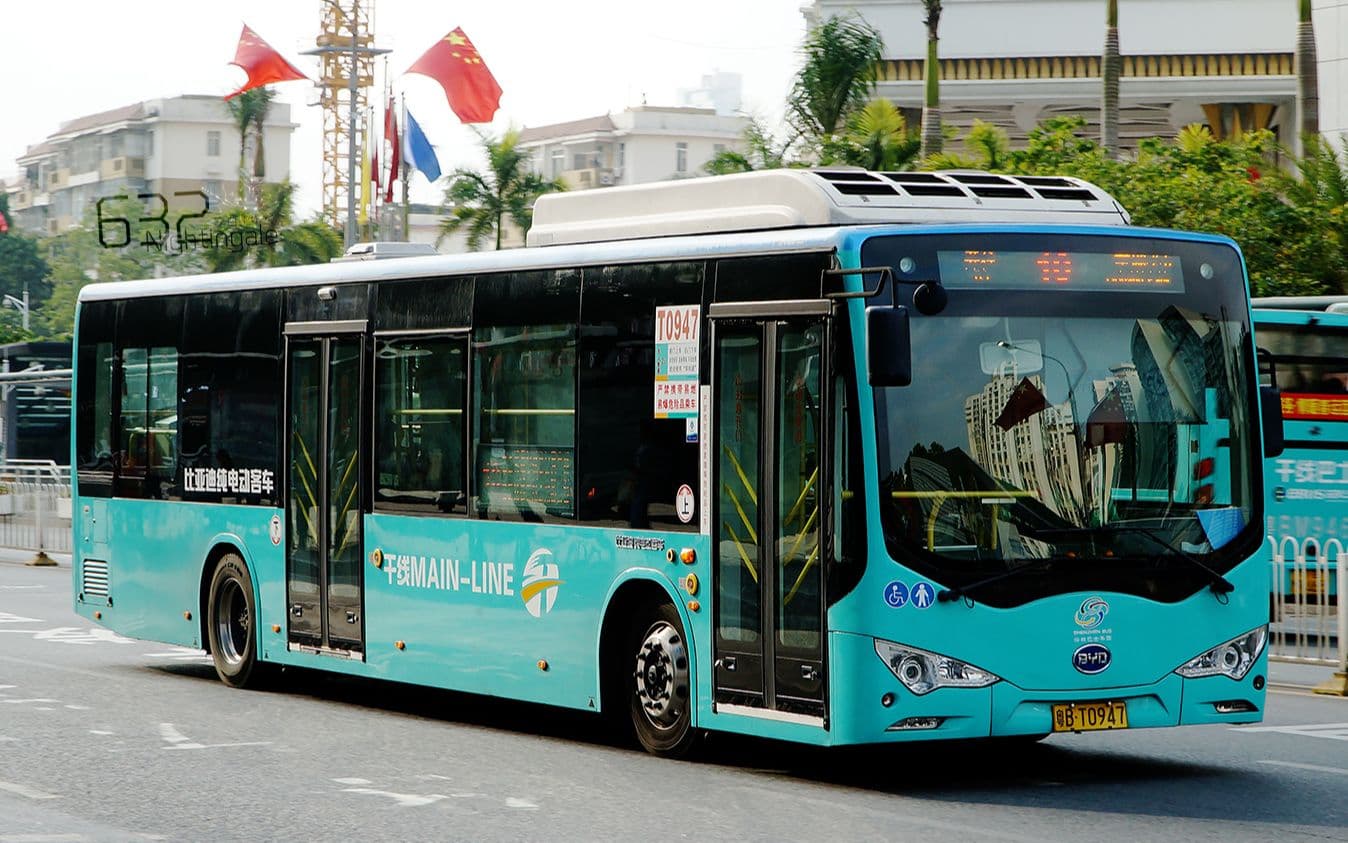 Figure 2: Pure Electric Bus Operating on the Streets of Shenzhen (Source: Public Media Reports)
APEC's Policy Direction: Green Trade and Inclusive Energy Access
This year's APEC placed green, low carbon transition and supply chain synergy at the top of its agenda. The Suzhou Statement, adopted at the Ministers Responsible for Trade Meeting in May, called for facilitating trade in green products and aligning green industry standards. In September, the Energy Ministers' Meeting endorsed the APEC Vision and Action for Inclusive Energy Access, defining for the first time the core pillars of inclusive energy as "safe and reliable, sufficient and resilient, universally accessible, sustainable, and affordable." In November, the outcome document of the APEC CEO Summit further urged economies to strengthen supply chain resilience and advance trade facilitation. For outdoor lighting manufacturers, these commitments carry concrete practical implications: vast off grid and weak grid regions across the Asia Pacific still face acute lighting deficits, and meeting those needs has now entered the regional cooperation agenda, alongside cross border circulation of green products and the reduction of trade barriers.
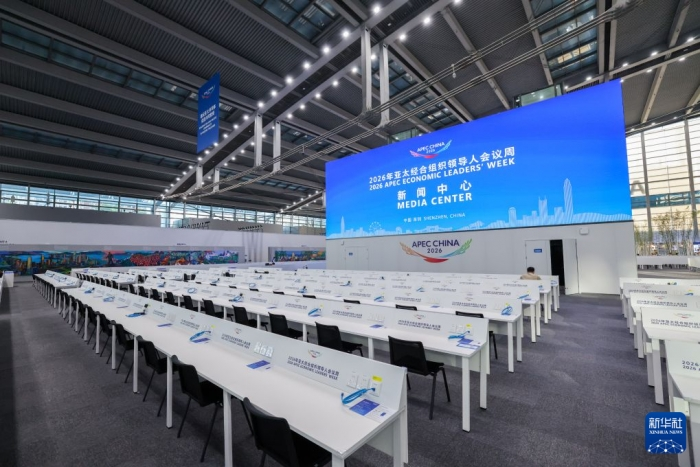
Figure 3: Media Center of the 2026 APEC Economic Leaders' Week in Shenzhen (Source: Xinhua News Agency)
LEAD OPTO's Product Logic: Turning Macro Trends into Deliverable Solutions
With a long standing focus on solar outdoor lighting, LEAD OPTO offers a core portfolio spanning integrated solar streetlights, radar sensing solar streetlights, and industrial outdoor luminaires. Its integrated architecture houses monocrystalline solar panels, lithium iron phosphate (LiFePO4) energy storage, and an intelligent controller within a single luminaire body. Field deployment requires only mounting the fixture onto the pole and configuring the operating mode, eliminating trenching, cabling, and power distribution upgrades. Equipped with microwave radar sensing, the smart models automatically adjust brightness based on pedestrian and vehicular traffic, extending battery autonomy while ensuring safe nighttime illuminance, making them especially suitable for rural roads and secondary industrial park routes.
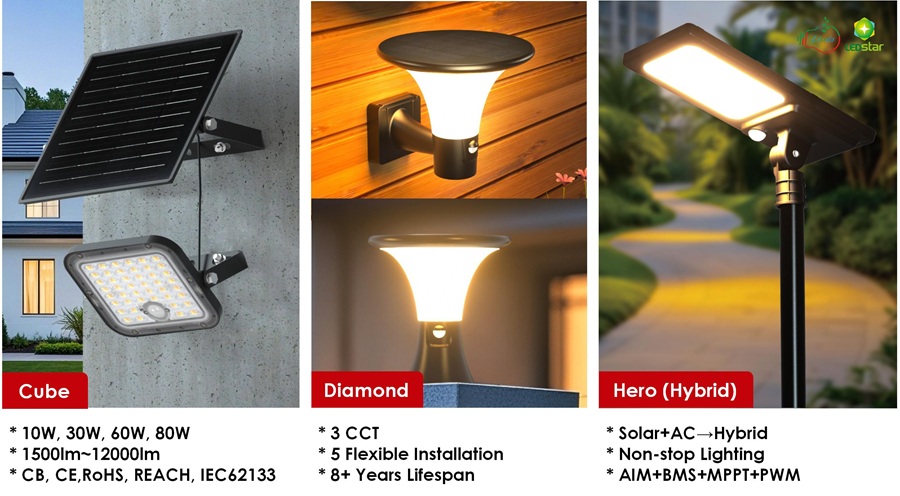
Figure 4: Application Scenarios of Integrated Solar Streetlights (LEAD OPTO Product Illustration)
For international engineering clients, LEAD OPTO supports full customization across wattage, pole height, ingress protection (IP) ratings, and lighting schedules, shipping every order with complete test reports and compliance documentation to streamline local regulatory approvals. On the commercial front, the company provides project illuminance simulations, pole layout designs, and scheduled batch delivery, serving municipal infrastructure projects, EPC contractors, and regional distributors. At the core of this strategy is a shift from "selling luminaires" to "delivering turnkey, inspection ready lighting systems." This approach aligns closely with APEC's vision for inclusive and affordable energy, while directly addressing the real demand for economical off grid lighting across Southeast Asia, South Asia, Latin America, and Oceania.
Frequently Asked Questions (FAQ)
Q1: Why are solar streetlights a practical complement to electric public transit in Asia Pacific infrastructure projects?
Electric buses eliminate tailpipe emissions along urban transit corridors, while off grid solar streetlights solve nighttime visibility and safety on roadways where extending underground power lines is too slow or costly.
Q2: How do 2026 tariff and certification changes affect solar streetlight procurement across APEC economies?
While APEC promotes green trade alignment, individual markets enforce strict entry rules. New U.S. Section 232 polysilicon tariffs, mandatory TISI certification in Thailand, compulsory solar certification in the Philippines, and China's April 2026 cancellation of PV export tax rebates increase compliance costs and phase out uncertified imports.
Q3: What technical specifications should engineering buyers evaluate for integrated and radar sensing solar streetlights?
Buyers should evaluate monocrystalline panel conversion efficiency, LiFePO4 battery cycle life and thermal tolerance, MPPT and PWM charge controller stability, IP65 or higher ingress protection, and adaptive dimming profiles. Microwave radar sensing models maintain baseline safety illumination during quiet hours and boost output to 100% upon detecting vehicles or pedestrians, extending backup autonomy across multiple consecutive rainy or overcast days.
About the Author
Mike | Senior Outdoor Lighting Solution Specialist & Technical Engineer, LEAD OPTO Mike is a Senior Outdoor Lighting Solution Specialist and Technical Engineer at LEAD OPTO with 12 years of R&D and international engineering project experience in solar and industrial LED lighting systems. His technical expertise spans off grid photovoltaic sizing, LiFePO4 battery thermal management, MPPT smart charge control, optical distribution design, and DIALux roadway illuminance modeling. |

Whatsapp/Wechat: +86 15019255365

Whatsapp/Wechat: +86 15019255365
+86 752 3339581 / 3339952 +86 755 84660522 / 84682177
lead@lead-lighting.com


 EN
 Home >


