

-
Contact number:
+86 752 3339581 / 3339952 +86 755 84660522 / 84682177


Time:2026-11-25 Editor:Mike Views:0
Executive summary: While a single solar street light hardware platform can serve global destinations, regulatory compliance cannot be unified under one certificate. Because a solar lighting system spans four distinct legal categories—luminaire, photovoltaic module, lithium battery, and controller—any variation in configuration, wattage, sensors, or pole height requires separate technical evidence. |
One 8 metre solar street light can ship to Phoenix, Manchester and Duesseldorf from one housing, one lens and one battery pack. It cannot ship on one set of paperwork. A solar lighting system is not one product under the law: it is a luminaire, a photovoltaic module, a lithium battery and a controller, each under a different rule set. Buyers who plan a first order around a single certificate usually meet the gap at the port, when the container is already booked.
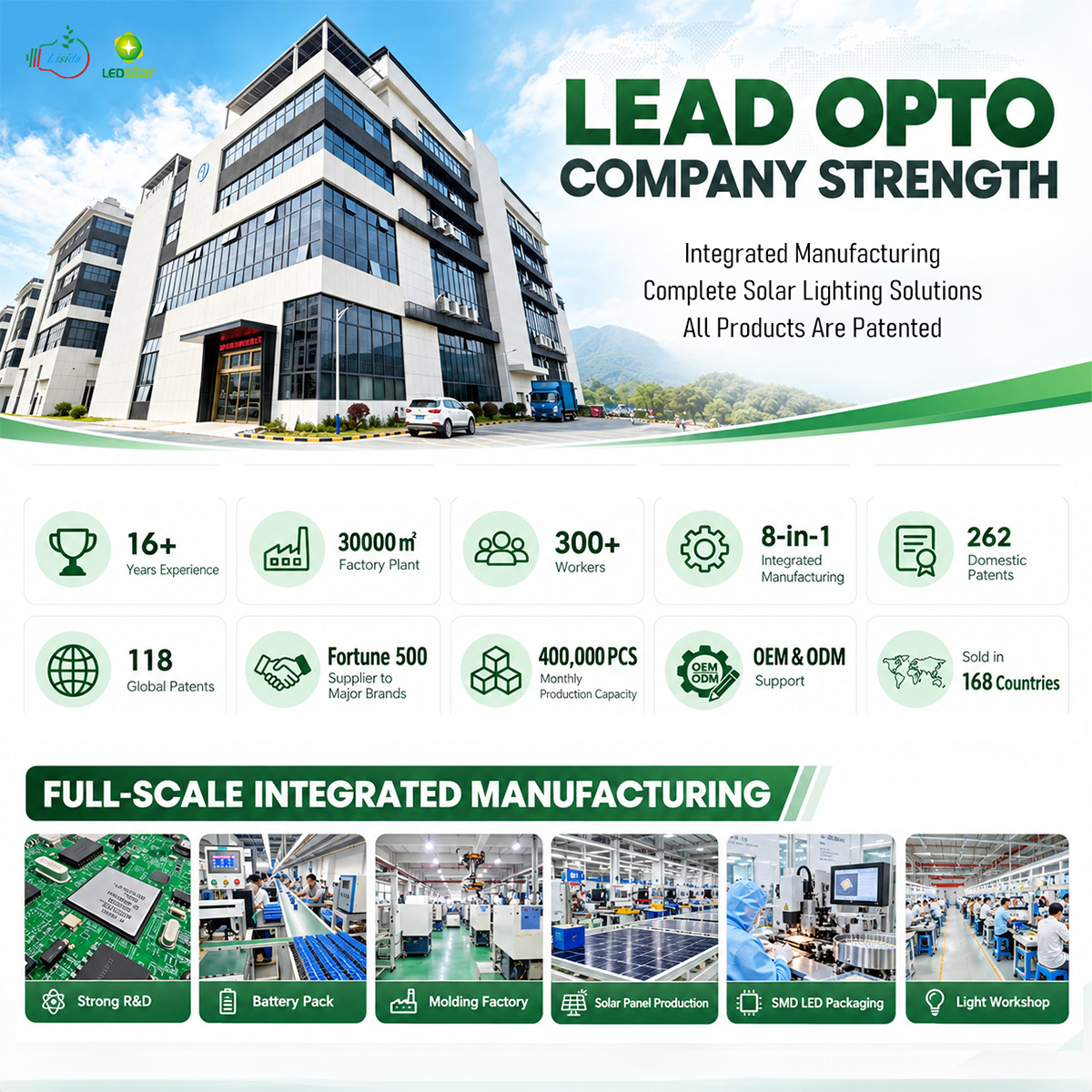
Separate the hardware from the sales configuration. A 100 W all in one unit with a 12.8 V 60 Ah LiFePO4 pack is one platform. Change the colour temperature from 4000 K to 5700 K, add a microwave sensor, raise the pole from 6 m to 8 m, or swap the label language, and it becomes a different configuration. A shared housing is not proof of equivalence, and a shared certificate is not a procurement file.
A workable file is built in four layers.
Layer | What it records |
Hardware platform | Housing, optical design, intended application, compatible modules |
Approved configuration | Battery chemistry and capacity, LED bin and driver, CCT and CRI, sensors, tooling |
Market variant | Language, warnings, importer identity, packaging, published claims |
Release record | Evidence that a batch and variant may ship to a specific country |
The fourth layer is usually missing. A test report proves that a sample complied; a release record proves that the pallet holds the configuration that report describes. Distributors who ask for both clear customs faster than those who ask only for a certificate.
Four questions settle most of the classification: standalone off grid or grid assisted with an AC input; luminaire or photovoltaic system; which battery category; fixed installation or portable product. The answers decide the standard list, the label set and the documents your importer will be asked for at the border.
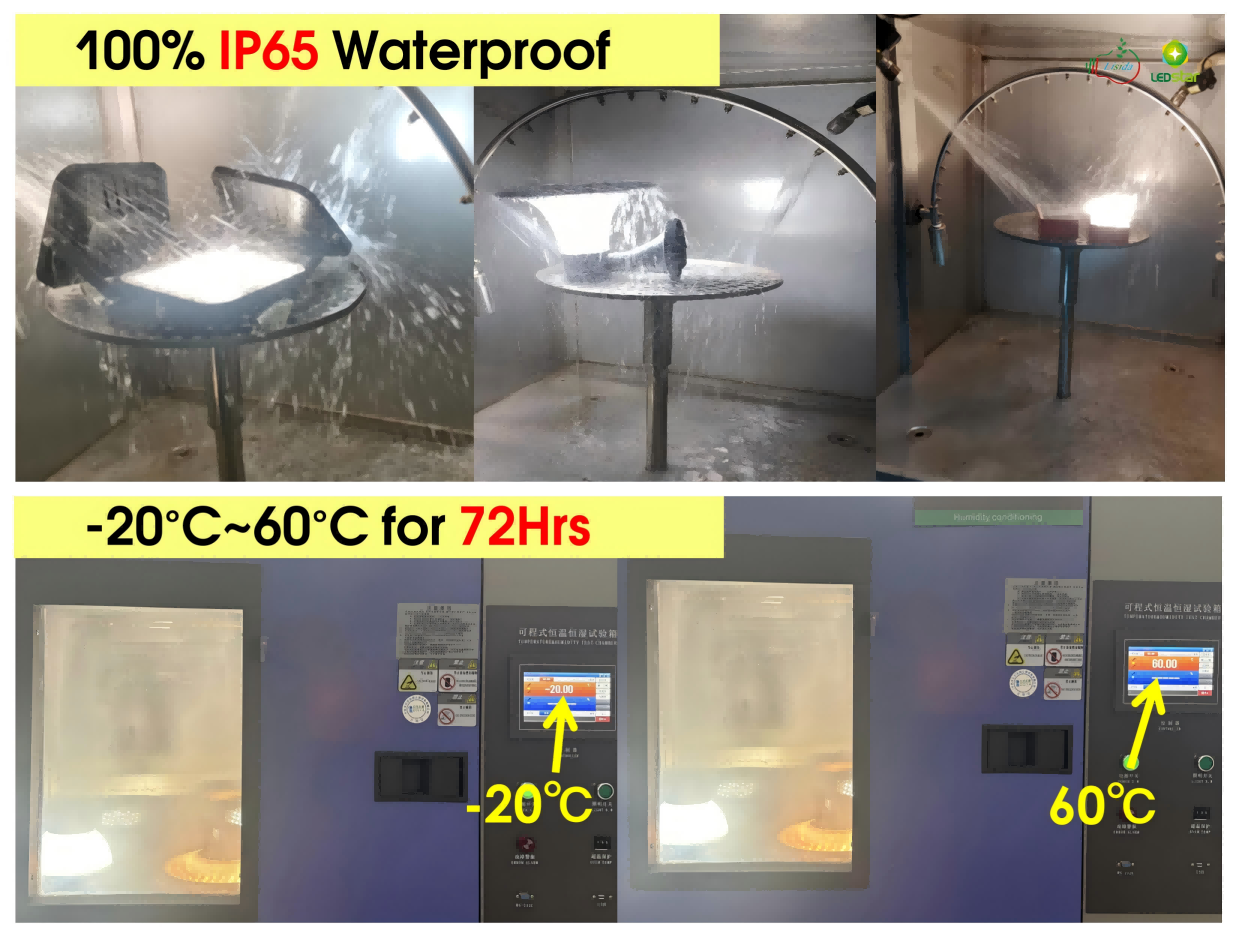
LEAD OPTO Rigorous Product Testing
In the European Union the answers diverge at once. The Low Voltage Directive 2014/35/EU covers equipment rated 50 V to 1000 V AC or 75 V to 1500 V DC, so a 12 V or 24 V DC standalone unit falls outside it. The EMC Directive 2014/30/EU, the RoHS Directive 2011/65/EU and, where the controller carries Zigbee or LoRa, the Radio Equipment Directive 2014/53/EU do not follow that voltage line and still apply. A hybrid unit with a 230 V input moves back inside the Low Voltage Directive.
Ecodesign is the layer few solar suppliers expect. Regulation (EU) 2019/2020 reaches light sources placed on the market inside a containing product. Where the LED module can be removed for verification without damage, the luminaire is a containing product and the supplier owes replaceability information and end of life dismantling instructions on a free access website. Where it cannot be removed, the whole luminaire is assessed as a light source. Light sources in battery operated products sit in an Annex III exemption that standalone units may rely on and grid assisted versions may not.
Battery class changes the obligations again. A portable battery is sealed, weighs 5 kg or less and is not designed for industrial use; an industrial battery is designed for industrial use or weighs more than 5 kg. Both fall under Regulation (EU) 2023/1542: collection marking since 18 August 2025, labelling and QR codes through 2026 and 2027, and a battery passport for industrial packs above 2 kWh from 18 February 2027. Transport is separate again, and no forwarder accepts a pack without a UN 38.3 summary. For tender work the practical result is one technical file per market, not one certificate for the catalogue.
Classification settled, compliance becomes a table.
Market | Core requirements | Commercial layer |
European Union | EMC, RoHS, RED where applicable, batteries regulation, Ecodesign information, CE | WEEE and packaging registration per member state |
United Kingdom | Same technical file, plus UK declaration of conformity if UKCA is applied | CE accepted indefinitely; retailer documentation |
United States | ANSI/CAN/UL 8801, UL 1598, UL 8750, FCC Part 15, UN 38.3 | DLC listing for rebates; Title 24 where applicable; local wind load review |
Australia / Gulf | RCM to AS/NZS 60598.2.3; SASO or GCC scheme by country, local label language | Importer of record and registration per state |
Two rows deserve a note. In the United States, ANSI/CAN/UL 8801 is the system level standard for photovoltaic luminaire systems, built on a subset of IEC/UL 61730, while UL 1598 and UL 8750 govern the luminaire and the LED equipment; a DLC listing is a rebate ticket, not a legal permit. In the United Kingdom, CE marking remains recognised indefinitely, so UKCA is optional but a UK declaration is not. For a wholesale distributor selling into three markets the output is three document packs and one hardware family.
What can be shared: the housing and lens family, the LED module family with a controlled bin and driver, the PV module tested to IEC 61215 and IEC 61730, the controller family, IP66 to IEC 60529 and IK08 to IEC 62262, and the mounting interface. This is what makes an OEM solar street light programme efficient and keeps the BOM short for every buyer in the chain.
What cannot be extended without fresh evidence: battery chemistry or capacity, colour temperature or CRI, an added sensor or radio, or a taller pole that alters wind load. A report for a 60 W unit does not cover a 100 W unit in the same body. Ask which model number appears on the report, not which product family.
Nameplate space, IP rating position, the CE or UKCA area, the WEEE and battery symbols, the QR area, the serial and date code, and warnings in the importer's language all need room on the casting. Deciding this in the tooling is cheap; retrofitting a finished mould is not.
The document set should state what each item covers: the declaration of conformity, reports with sample identification, IES photometric files, a datasheet with measured rather than nominal figures, the transport summary, REACH and SCIP status, packaging registration, the warranty statement, and the manual in the correct language. Buyers compare suppliers on these eight items long before they compare price.
Take one 8 m system in three approved configurations: 4000 K at 60 W for a German municipal tender, 5700 K at 100 W with a motion sensor for a US parking area, 3000 K at 40 W for an Australian pathway. The housing is identical; the declaration, label set, packaging, manual language and battery file are not. A pallet that cannot be traced to a destination and a configuration is not released.
The same discipline applies to the quotation. State the destination, the quantity, the terms FOB Shenzhen or CIF, and the required documentation, and the price and the lead time can be given in one reply instead of four rounds of email.
1. How is this configuration classified in each market: luminaire, PV system, or both?
2. Which obligations are statutory, which are retailer conditions?
3. Which parts of the design are shared, which are market specific?
4. Which exact configuration does each report or certificate cover?
5. Who signs the declaration of conformity, and who is the importer of record?
6. Is the label, manual and online listing approved for each market and language?
7. Which changes trigger retesting, and how is that recorded?
Mike: No. Keep the housing, rebuild the file. A 12 V DC standalone unit sits outside the Low Voltage Directive but EMC, RoHS and, with a radio, RED still apply; the US system is assessed under ANSI/CAN/UL 8801; the UK accepts CE but needs a UK declaration if you use UKCA. Budget one file per market, and expect the battery documents to finish last.
Mike: Seven items: pole height and wind load, lux and uniformity for the road class, daily operating hours and autonomy days, battery chemistry and the expected replacement cycle, CCT and CRI, IP and IK rating, and the certificate list. Send those and you get a configuration, a BOM and a lead time in the same week.
Mike: Standard configuration: sample in 7 to 10 days, one 40 ft container in 25 to 30 days after deposit. New tooling or a custom CCT adds 15 to 20 days. The IES files, datasheet and warranty statement come with the quotation, not after the order.
Mike is a lighting engineer at LEAD OPTO with 12 years in solar outdoor lighting: optical design, lithium battery integration, off grid system sizing, and the certification work that sits behind a municipal or industrial project. LEAD OPTO designs and manufactures solar street lights, solar flood lights and all in one solar lighting for municipal, commercial and industrial projects, with 16 years of field data behind the platform. Send your target markets, pole height, load, quantity and the documentation list your client requires, and we will return a configuration, a BOM and a document plan for each country, with the price and the lead time in the same reply. |

Whatsapp/Wechat: +86 15019255365

Whatsapp/Wechat: +86 15019255365
+86 752 3339581 / 3339952 +86 755 84660522 / 84682177
lead@lead-lighting.com


 EN
 Home >


