

-
Contact number:
+86 752 3339581 / 3339952 +86 755 84660522 / 84682177


time:2026-10-10 Editorial:Mike Views:0
Every solar manufacturer wants to become a preferred brand or supplier for government projects, but this requires real factory manufacturing strength and time to build a project track record. For example, in China, we have provided many solar light installation services for government expressway projects. The image below shows LEAD OPTO’s government solar street light project on the Changshen Expressway in China.
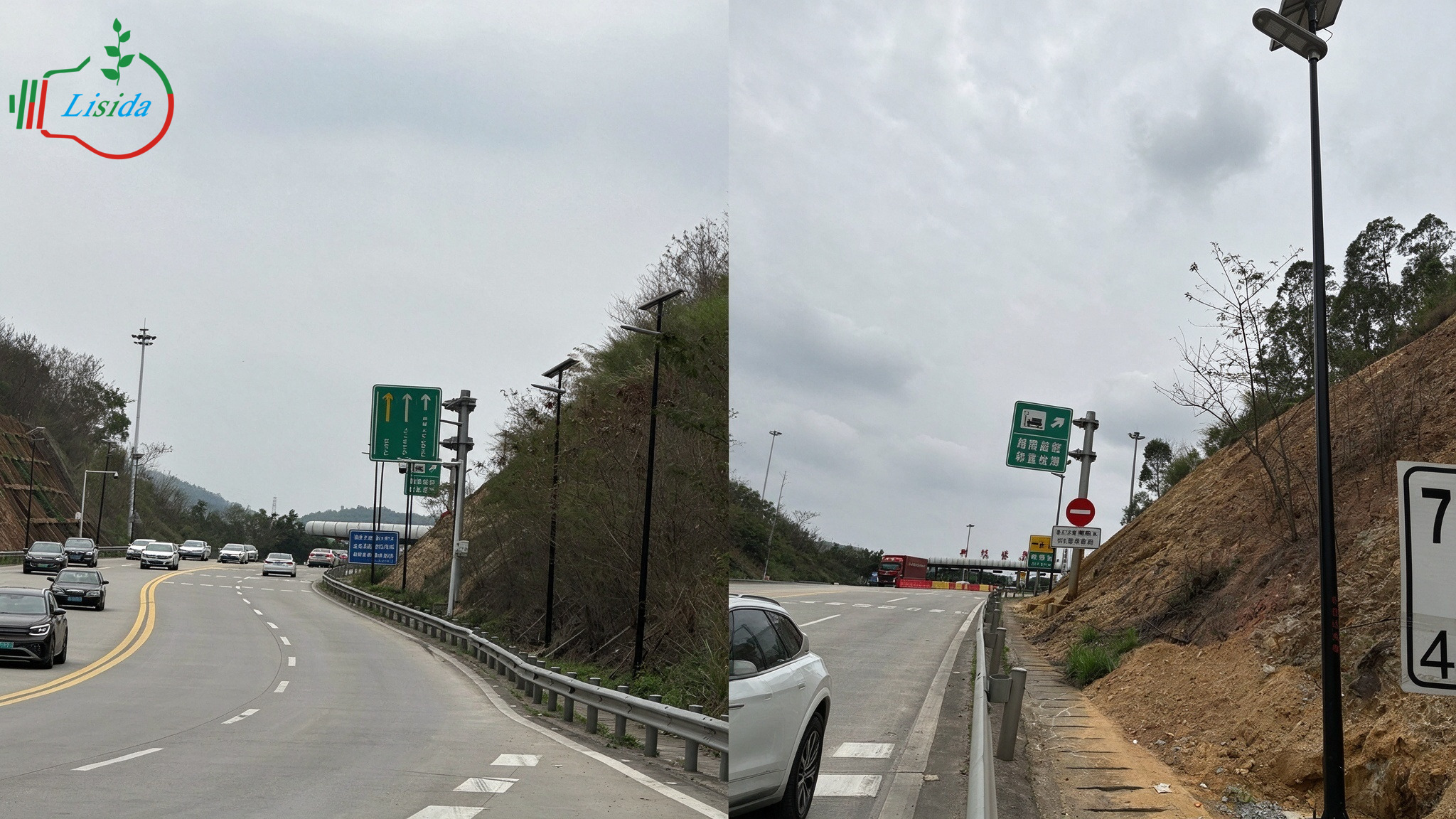
Drawing of Solar Lamp Project on Changchun-Shenzhen Expressway
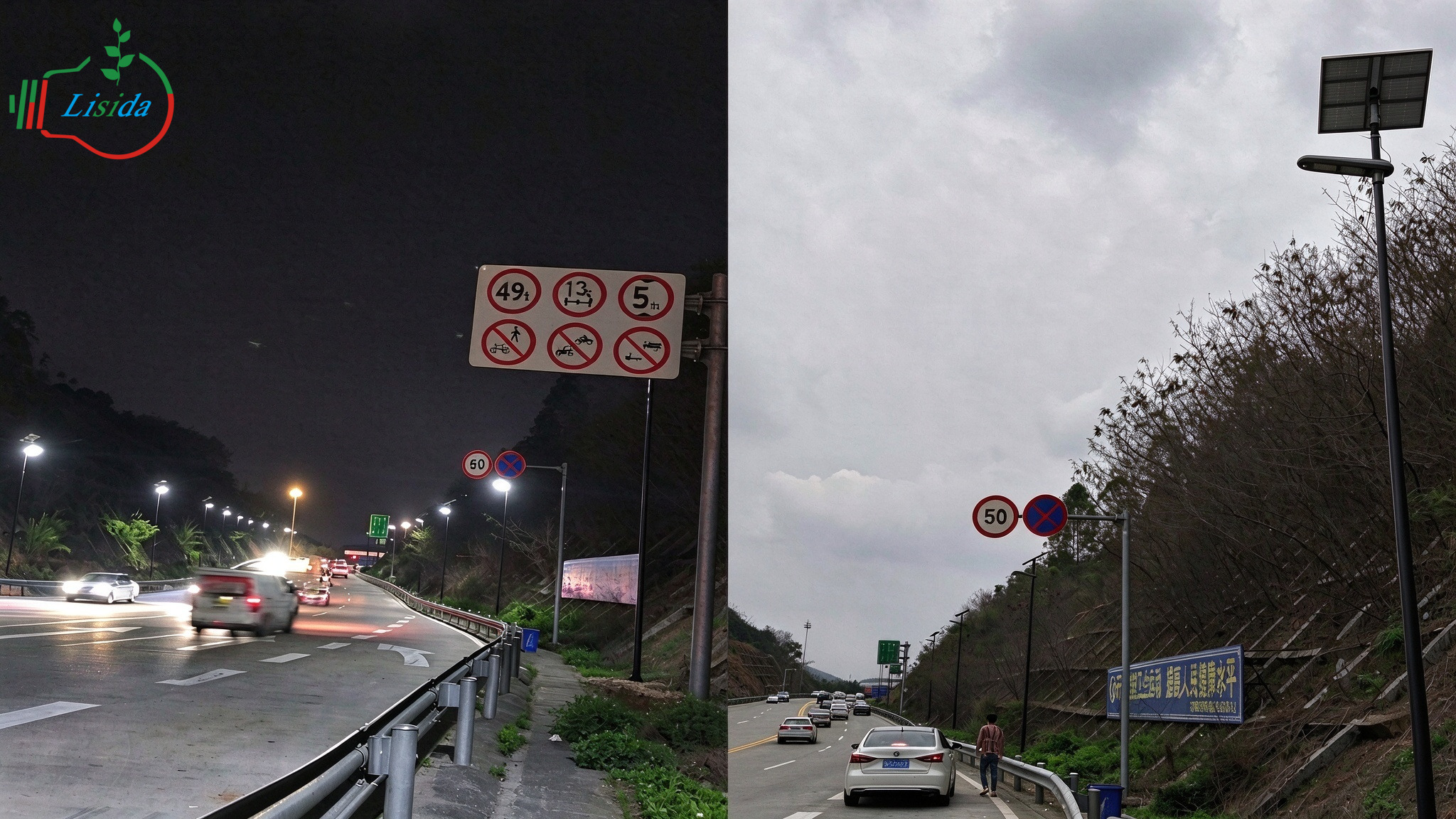
Night view of solar lights on the Changchun-Shenzhen Expressway
LEAD OPTO has also worked with governments in North and South America. In government road projects in multiple countries across the Americas, our solar street lights have earned an excellent reputation. The Panama project selected the 20W PRO model. The customer highly recognized this engineering light: it is highly intelligent, lights up reliably every night, and rated its quality as VERY GOOD QUALITY.
The Panama customer is very satisfied with the engineering design of the 20WPRO solar street light and took a video specially.
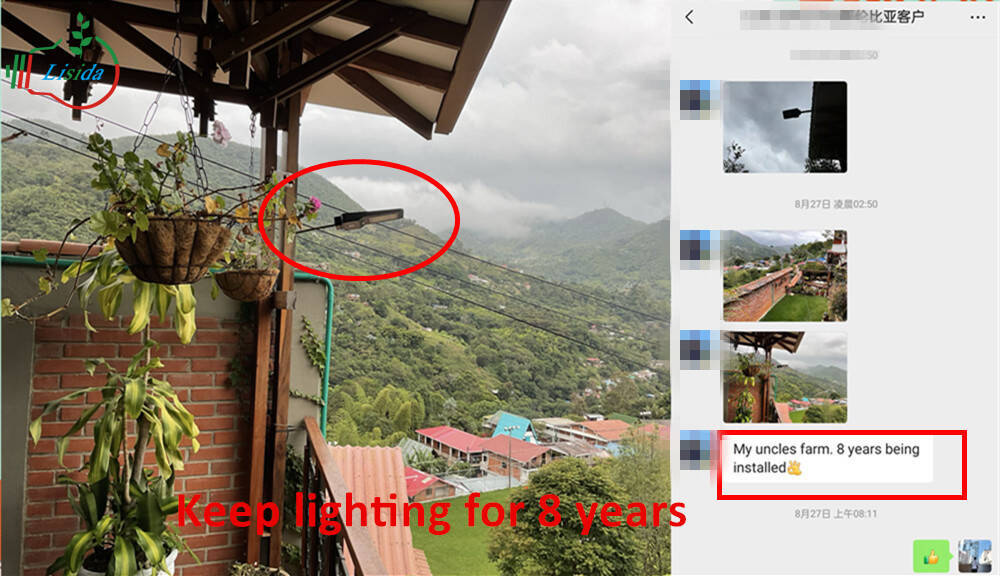
In Colombia, the solar street lights we delivered have been running stably for 8 years. Long-term outdoor testing has confirmed the product’s durability and fully proves that the product can adapt to Latin America’s complex and variable outdoor climate. It is suitable for mountain roads, expressway ramps, and other government road scenarios.
In engineering tenders, priority is given to illuminance (lux) and luminous flux (lumens); wattage is only a reference. Expressways have much higher requirements than ordinary rural roads for illuminance uniformity, light distribution curves, and continuous rainy-day autonomy.
Standard 10 m / 12 m poles, single-sided or staggered layout: 100W–150W LED. 120W is commonly used in mainstream projects.
Wide lanes, high masts above 12 m, and heavy nighttime traffic: 150W–200W.
Target illuminance: average 25–30 lux, uniformity ≥0.4 (EN 13201 M1/M2).
8–10 m poles: 60W–100W LED. 80W is the most common choice.
Target illuminance: 20–25 lux.
Higher requirements apply: 150W–200W. Some high-mast solutions reach 250W.
When government road infrastructure projects seek reliable outdoor lighting solutions, choosing a highly qualified Chinese solar street light supplier is critical. Government tenders have strict requirements for lighting products: photometric compliance, long product life, complete certification documents, and stable after-sales service. These requirements are especially important in expressway and high-speed road lighting projects.
Our product range is specially designed to meet international road lighting standards. The M2-class solar street light complies with EN 13201 road lighting specifications and is suitable for high-speed traffic corridors. The 120W expressway solar street light is our main model for arterial road construction. It offers high luminous efficacy, uniform illuminance, and stable performance in harsh climates.
Different sections of a high-speed traffic corridor require customized lighting equipment. Expressway mainline solar LED street lights are equipped with anti-glare optical lenses to prevent visual interference for drivers on multi-lane expressways. Their intelligent dimming system automatically adjusts brightness based on traffic volume, saving solar power and maintaining stable road surface illuminance throughout the night.
Expressway ramp solar lights are specially optimized for curves and entrance/exit ramps, ensuring drivers have clear visibility in speed-change sections.
As a reliable supplier serving global government projects, LEAD OPTO can provide a complete set of tender documents, including DIALux photometric simulation reports, IEC, CE, and IP66 test certificates, meeting the documentation required for public tenders.
The products use long-life lithium iron phosphate batteries and high-efficiency monocrystalline silicon solar panels. They can support continuous lighting for 3–5 rainy days, making them suitable for remote highway sections without grid coverage.
LEAD OPTO supports large-volume customization and OEM/ODM services, and can provide on-site installation guidance and long-term technical support for large government procurement orders. Whether for expressway mainlines, highway ramps, or arterial roads, our full product range (including M2-class solar street lights and 120W expressway solar street lights) can match the specification requirements of different road classes.
For government infrastructure contractors and EPC engineering companies, working with a professional Chinese solar street light manufacturer can reduce project risk, lower operation and maintenance costs, and provide durable, environmentally friendly lighting systems for long-term public road operation.
Rural township roads generally use 40–60W. This cannot be directly applied to expressways. Expressways have strict uniformity requirements. Simply increasing wattage is useless; a road-specific Type III light distribution lens is a must.
These parameters can be placed directly into a foreign trade tender proposal.
Mainline preferably 10 m / 12 m; ramps 8–10 m.
Staggered layout 35–40 m; opposite-side paired layout 30–35 m.
≥150–160 lm/W. The Wing series delivers 160 lm/W, making it very suitable for expressway projects.
3–5 days of rainy-day autonomy required. This is a mandatory indicator for expressway projects. Lithium iron phosphate battery + Grade A monocrystalline silicon + solar panel.
IP65 or above; wind resistance ≥150 km/h. Expressways in open areas face strong winds.
Item | Specification |
Pole height | Mainline: 10 m / 12 m preferred; ramps: 8–10 m |
Pole spacing | Staggered layout: 35–40 m; opposite-side paired layout: 30–35 m |
LED efficacy | ≥150–160 lm/W; Wing series: 160 lm/W |
Energy storage | 3–5 rainy days; lithium iron phosphate battery + Grade A monocrystalline silicon + solar panel |
Protection | IP65 or above; wind resistance ≥150 km/h |
At the same 100W, a standard floodlight and a professional road-lighting fixture can produce a huge difference in road surface illuminance. Including lumens + illuminance + uniformity in tender documents makes it easier to win the order.
40W/60W is only suitable for rural roads. Using 40W/60W on mainlines cannot meet traffic-standard illuminance, and EPC projects will be directly disqualified.
The standard engineering configuration runs at full power in the first half of the night and reduced power in the second half (40%–50% brightness), greatly reducing battery and solar panel configuration costs.
For government infrastructure contractors and EPC engineering companies, working with a professional Chinese solar street light manufacturer can reduce project risk, lower operation and maintenance costs, and provide durable, environmentally friendly lighting systems for long-term public road operation.
Whether the project is an expressway mainline, a highway ramp, or an arterial road, the right solar street light supplier should bring proven government project experience, compliant photometric documentation, and products engineered for the real demands of road lighting.
A:Prioritize illuminance (lux), lumens and uniformity instead of only wattage. EN13201 compliance and 3‑5 days rainy‑day backup are also key tender indicators.
A:Not recommended. Rural‑road fixtures lack professional Type‑III road light distribution lens, and cannot meet highway requirements for illuminance uniformity.
A:We can supply DIALux photometric simulation reports, IEC, CE, IP test certificates, full sets of documents to meet public tender requirements.
A:Our units have run stably for 8 years in Colombia. Equipped with lithium iron phosphate battery and A‑grade monocrystalline panel, they adapt well to harsh outdoor environments.
A:We support OEM & ODM customization, on‑site installation guidance, plus long‑term technical support for highway, ramp and plaza lighting projects.
Mike has over 12 years of experience in outdoor solar lighting engineering. He specializes in solar street light solution design for government tenders and EPC highway & rural road projects.
He is familiar with EN13201 road lighting standards, DIALux photometric simulation, and overseas project practices across Panama, Colombia and other regions. He shares practical tips on lighting parameter selection, tender document preparation and on-site project implementation to help EPC contractors reduce project risks.

Whatsapp/Wechat: +86 15019255365

Whatsapp/Wechat: +86 15019255365
+86 752 3339581 / 3339952 +86 755 84660522 / 84682177
lead@lead-lighting.com


 EN
EN Home >