

-
Contact number:
+86 752 3339581 / 3339952 +86 755 84660522 / 84682177


time:2026-10-31 Editorial:Mike Views:0
The movement toward eco-conscious living is steadily expanding into residential lighting. Solar-powered outdoor fixtures, equipped with integrated photovoltaic panels, are seeing rapid adoption across urban and suburban residential communities. Aligning seamlessly with modern home architecture that values energy efficiency and low maintenance, solar lighting has quickly become a preferred choice for residential landscapes.
A Turning Point in 2026
This wave of solar lighting momentum reached a major turning point in 2026. Driven by growing consumer awareness of household utility budgeting and environmental sustainability, an increasing number of homeowners are turning to solar solutions for gardens, patios, and perimeter walls, reshaping the aesthetic and practical footprint of residential outdoor lighting.
According to Amy, Brand Director at LEAD OPTO, consumer demand for solar fixtures began emerging several years ago, but 2026 marked the transition into widespread, mainstream adoption. Stronger consumer confidence in energy storage battery stability, combined with increasingly accessible price points, together propelled this market shift.
Overcoming the Battery Barrier
The initial foundation of this trend took shape as early as 2024. While solar lights imported from China were entering the market, overall volume remained modest. The primary bottleneck centered on battery longevity. Early battery technology suffered from short lifespans, causing hesitation among prospective buyers who were reluctant to commit to unproven reliability. By 2026, however, next-generation energy storage solutions matured, establishing market-tested durability that effectively addressed the primary barrier to purchase.
Affordability Meets High Performance
Steadily decreasing, highly competitive retail pricing has served as another critical catalyst. In the early stages of market development, standalone residential solar units commanded prices upwards of IDR 700,000. Through supply chain optimization and manufacturing innovation, comparable high-performance fixtures now retail around IDR 200,000 — delivering high-standard illumination without compromising quality or durability.
Amy — Brand Director at LEAD OPTO |
Practical Solutions Beyond Grid Infrastructure
The appeal of solar lighting extends well beyond eco-conscious aesthetics in suburban homes. In areas where traditional utility infrastructure is limited or cost-prohibitive, solar lights serve as a highly practical lighting solution. Traditional grid-powered outdoor lights require complex electrical wiring, labor-intensive installation, and ongoing monthly electricity expenses. In contrast, solar fixtures generate power independently from daylight, eliminating trenching costs and operating with near-zero long-term electricity bills.
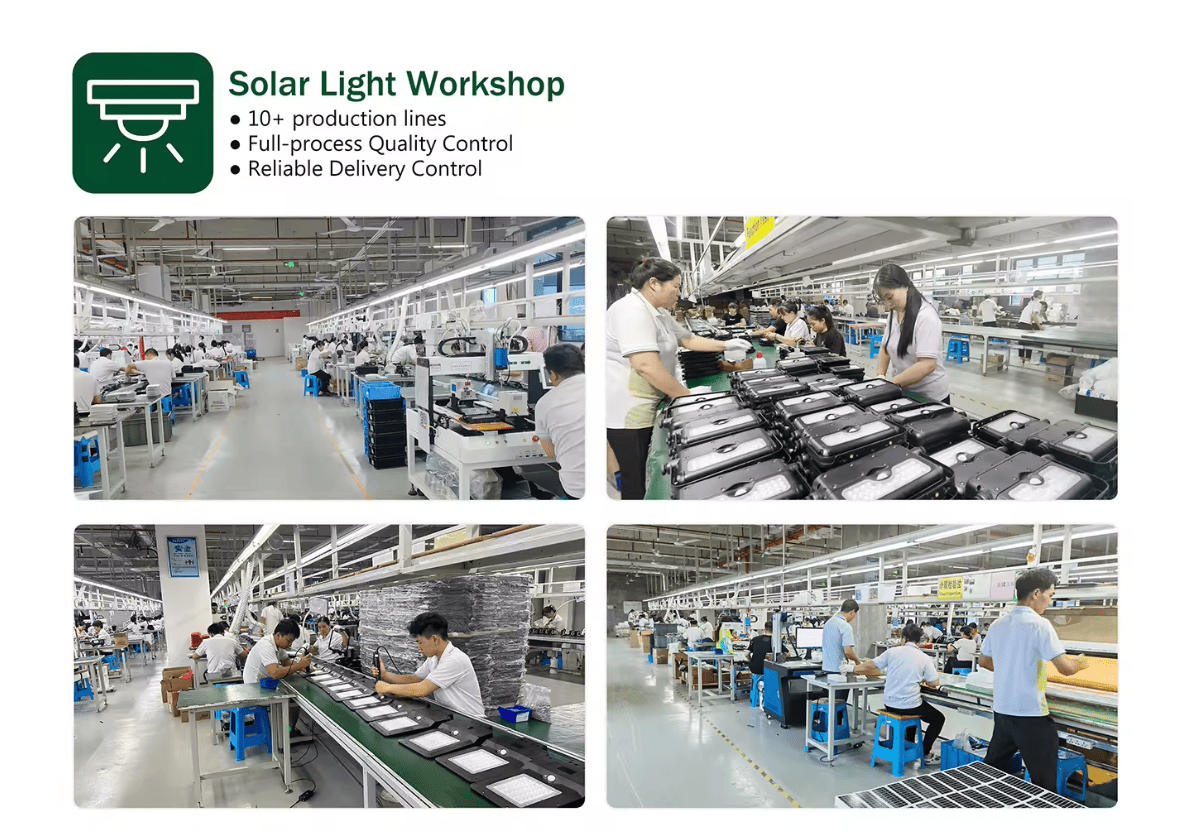
LEAD OPTO Solar Light Workshop
Introducing the LEAD OPTO Butterfly Solar Wall Light Series
Capturing this shift in consumer behavior, LEAD OPTO has launched its flagship Magic Solar Wall Light Series, specifically designed for outdoor residential application. Built to withstand challenging outdoor weather with an IP65 dust and waterproof rating, the fixture provides up to 120 hours of continuous, stable illumination on a full charge — lowering the barrier for everyday households to transition to clean energy.
At LEAD OPTO, the philosophy is simple: transitioning to sustainable living should be effortless. By absorbing solar energy throughout the day and automatically illuminating courtyards and terraces at dusk, homeowners can elevate their exterior landscape while reducing their home's carbon footprint.
Modern homeowners evaluate outdoor lighting across three core dimensions: long-term durability, operational cost savings, and architectural aesthetic harmony. With the Butterfly Series, LEAD OPTO reinforces a central idea: embracing clean energy is as simple as replacing a porch light.
Frequently Asked Questions (Engineering Insights by Mike)
Q1: How does the PIR motion sensor in the Butterfly Series optimize battery life for home outdoor lighting?
Engineer Mike: From an engineering perspective, passive infrared (PIR) sensing is the single most efficient way to balance nighttime security with energy preservation. In our Butterfly wall light design, the fixture operates at a subtle ambient baseline brightness during idle dark hours. When motion is detected within 6–8 meters, the sensor triggers 100% full lumen output for 30 seconds before smoothly transitioning back. This smart duty-cycling conserves battery capacity so the light remains fully operational all night long.
Q2: Can solar residential wall lights like the Butterfly series withstand harsh tropical rain and high UV exposure?
Engineer Mike: Absolutely. Residential outdoor lights face constant sunlight and humidity. We engineered the Butterfly series with high-grade UV-stabilized polycarbonate and ABS casing, preventing yellowing and structural embrittlement over time. Rated at IP65, the housing completely seals out monsoon rain, dust, and insects, ensuring internal circuitry and optical lenses remain clean and fully functional year-round.
Q3: What makes monocrystalline PV panels superior for household solar wall lights compared to older polycrystalline options?
Engineer Mike: Monocrystalline panels utilize single-crystal silicon, yielding a significantly higher photoelectric conversion efficiency (up to 22.5%) compared to polycrystalline panels (typically 15-17%). For compact residential fixtures like wall lights where panel surface area is limited, monocrystalline technology enables maximum power harvest even during overcast weather, ensuring reliable battery charging in smaller footprints.

Whatsapp/Wechat: +86 15019255365

Whatsapp/Wechat: +86 15019255365
+86 752 3339581 / 3339952 +86 755 84660522 / 84682177
lead@lead-lighting.com


 EN
 Home >


