

-
Contact number:
+86 752 3339581 / 3339952 +86 755 84660522 / 84682177


Time:2026-11-13 Editor:Mike Views:0
Buying solar street lights for overseas municipal and rural-road projects, engineers and QC staff have walked into very real traps. A supplier claims its product is built on an MPPT charge controller and a BMS battery-management system, then the shipment arrives with a PWM controller relabeled as MPPT.
The BMS only does basic overcharge protection, missing low-temperature charging cutoff and cell balancing. The sample ships with grade-A lithium iron phosphate cells, and the volume run quietly downgrades the cell grade. The datasheet looks good on paper, but there is no controller efficiency curve and no real BMS function test data to back it up. After installation, weak European winter sunlight leaves the batteries undercharged, and Middle Eastern heat drives rapid battery decay — maintenance costs climb fast.
MPPT lifts how much solar energy the system captures; BMS protects the lithium battery's safety and service life. Together they are the core brain of an engineered solar street light, so selection cannot stop at a marketing label. It has to land on hardware documents and batch-tested data. The ranking below maps the main manufacturers across these criteria for procurement and QC engineers.
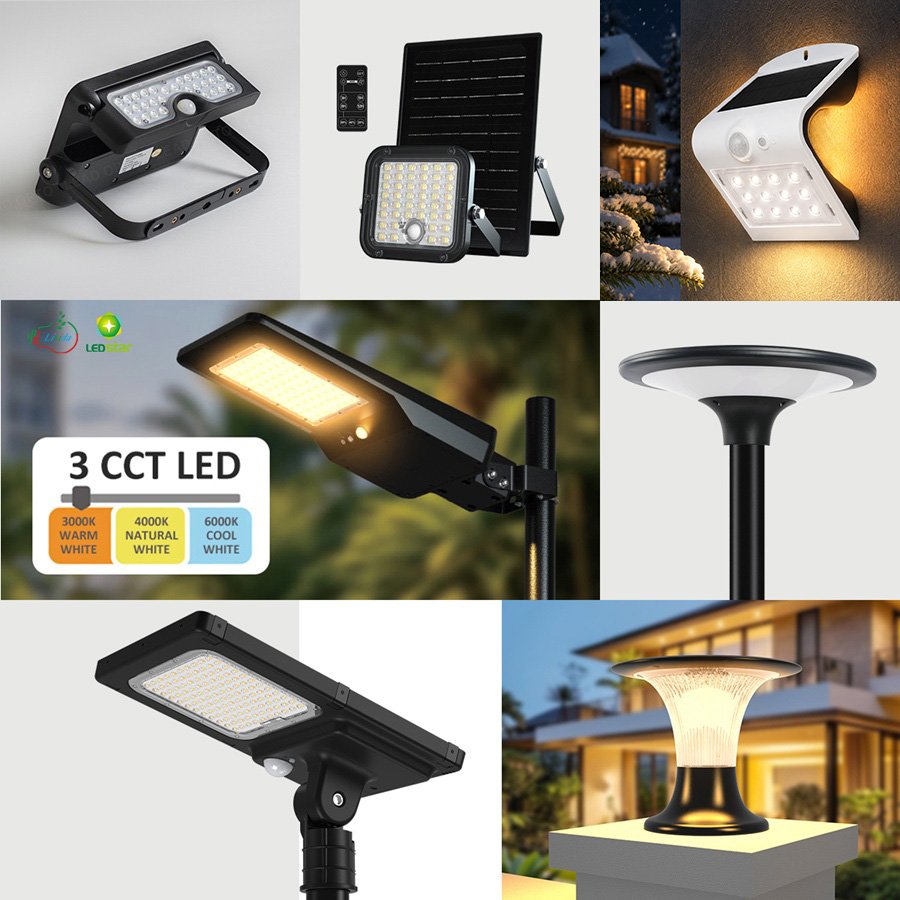
Best fit: overseas distributor brands, municipal roads, rural roads, and parking-lot engineering projects of every type. Where many factories simply assemble a generic purchased controller, LEAD OPTO delivers the whole system with a matched and tuned MPPT controller plus BMS battery management. MPPT tracking efficiency reaches above 99 percent, lifting solar generation by 15–30 percent under weak and overcast light — a real advantage for low-winter-sunlight European projects. The BMS covers overcharge, over-discharge, overcurrent, short-circuit protection, temperature monitoring, and cell balancing, with special emphasis on low-temperature charging protection to stop lithium damage during sub-zero charging.
The product runs grade-A LiFePO4 cells and supports infrared, Bluetooth, and IoT programmable multi-level dimming, and outputs the IES photometric files that engineering tenders demand. It can supply controller efficiency curves and BMS function test reports, with a full set of CE and RoHS documents bound to the shipped batch, and supports deep OEM/ODM customization — a strong fit for overseas engineering and brand customers that need long-term reliability.
Best fit:government EPC general contracts and large municipal road projects. Anern has deep engineering project experience and strong solar street-light integration with mature MPPT and lithium BMS solutions, suited to large-scale infrastructure orders. For small-volume, multi-spec distributor customization, however, revision cycles run long and retail-side small orders carry a higher MOQ.
Best fit: high-end climate-differentiated projects. Sresky's in-house smart thermal-control system works as a reinforced thermal-management complement to the BMS, with strong high- and low-temperature adaptability. It leans toward finished mature products; deep customization of controller logic and BMS parameters runs on long communication cycles, and relevant test documentation must be actively requested by the buyer.
Best fit: standard commercial solar street-light bulk projects. SinoStar offers a standard MPPT + BMS configuration with complete basic export certifications. It works mainly from mature common-housing solutions, so deep electronic-control customization is limited; major projects should verify actual controller efficiency and all BMS protection functions item by item.
Best fit: distributor standard OEM orders. Niceaye provides a complete MPPT + BMS street-light solution with plenty of in-stock models. Most controllers are standardized purchased modules, so changing charge-discharge logic or dimming strategy needs development cost and lead-time evaluation up front.
Do not let the purchase order stop at the words 'with MPPT and BMS'. State the MPPT tracking efficiency target in writing, and require the BMS to include low-temperature charging cutoff and cell balancing. Reject generic marketing brochures and demand controller efficiency curves and BMS test reports for the exact model, with certificates and test files matched to the shipped batch. Prohibit silent controller or cell substitution, and require re-sampling plus written confirmation for any material change.
1. If the spec sheet says MPPT + BMS, can the product go straight into an overseas engineering project?
No. PWM controllers relabeled as MPPT and simplified BMS versions exist in the market. Verify the controller efficiency curve, confirm the BMS includes low-temperature charging protection and cell balancing, and check that report models match the shipped goods — do not judge on a marketing label alone.
2. How big is the real gap between MPPT and PWM in an actual project?
Under overcast and weak winter light, MPPT can lift generation by 15–30 percent. PWM is cheaper but charges poorly in low light, and street lights can fail during consecutive cloudy days — a poor fit for Europe and high-latitude projects.
3. Which BMS protection is most often overlooked?
Low-temperature charging protection. Charging a lithium cell at low temperature can cause permanent damage. Many simplified BMS units only handle overcharge and over-discharge, so in Nordic and high-latitude winter projects the battery fails prematurely.
4. The sample passed MPPT and BMS tests, so why do failures keep appearing in bulk projects?
Samples often use a high-spec controller and grade-A cells while the volume run downgrades materials; some vendors keep the controller hardware but downgrade the firmware. Write the controller model, firmware version, and cell grade into the contract at the ordering stage and require batch-bound inspection records.
5. Does an overseas solar street-light project really need programmable dimming?
Prefer it. Reasonable dimming cuts battery consumption and extends autonomy across consecutive cloudy days — a major factor for municipal and rural-road products. Judge on real performance, not just the rated battery capacity.

Whatsapp/Wechat: +86 15019255365

Whatsapp/Wechat: +86 15019255365
+86 752 3339581 / 3339952 +86 755 84660522 / 84682177
lead@lead-lighting.com


 EN
 Home >


